


In the world of music, certain names do more than reflect talent—they carry symbols that spark curiosity. One such name is Kabaka Pyramid, a Jamaican artist whose work bridges reggae traditions, the raw energy of hip-hop, and the spiritual resonance of Rastafari. From global stages to quiet moments of meditation, Kabaka radiates a consistent aura: a musician who sees music as a soulful journey. This exclusive interview with Kabaka Pyramid comes to you through a collaboration between Kultur dot media and Singapura Dub Club as a contributor.
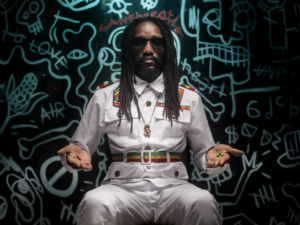
Behind his deep voice and sharp lyrics lies a human side rarely seen by the public. When asked what music he secretly plays at home when he’s not in the mood for reggae or hip-hop, his answer shatters stereotypes: a few afrobeats tracks. No pretense, just the simple honesty of a musician who remains a music lover offstage.
His pre-performance ritual? Nothing overly dramatic. No burning incense or lengthy mystical chants. He carries a small whistle-like tool for vocal warm-ups. Sometimes he does high knees, stretches, or yoga, depending on his mood. One thing’s certain: he avoids talking too much before a show, preserving his energy so his voice remains his weapon in every performance.
When it comes to identity, Kabaka is tied to two powerful symbols: “Kabaka,” meaning king in the Buganda language, and “Pyramid,” the timeless, majestic structure. Asked to choose between the two—does he feel more like a king or a pyramid?—his answer is resolute: King. For him, leadership and responsibility outweigh the permanence of a pyramid.
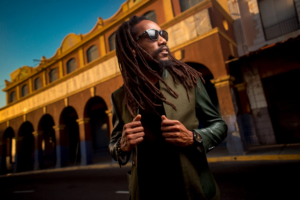
Amid the chaos of an industry that often blurs the line between idealism and commercialism, Kabaka sees Rastafari not as a label but as a deeply rooted spiritual path.
“Once your way of life becomes a part of you, you can only be yourself naturally, so distractions don’t bother you,” he says.
There’s both serenity and conviction in that statement; a belief that the outside world can never truly disrupt the center of gravity for a Rastaman who has found his core.
On Marcus Garvey—the figure often revered as a prophet in Rastafari—Kabaka offers a fresh perspective. He believes that if Garvey were alive in today’s digital age, he might point young Jamaicans to Ibrahim Traore, the young leader of Burkina Faso, as a source of inspiration. It’s a thought that bridges the Caribbean and Africa, the past and the future, spirituality and political reality.
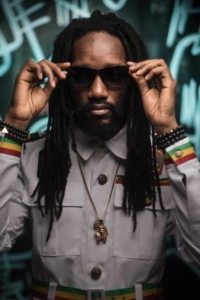
Reflecting on the start of his musical journey, Kabaka traces it back to his living room—a humble space that now feels like a nostalgic cornerstone. If he could go back to that room, he’d tell his younger self to join a choir and learn an instrument. There’s a playful tone in his words, but also an acknowledgment that every great musician begins with small, seemingly trivial steps.
Kabaka believes some lyrics don’t come from the mind but are “downloaded.” He cites writing “Well Done” as one such transcendent experience. For him, the creative process isn’t always linear or rational—there are moments of intuition, even something inexplicable.
As a self-confessed perfectionist, he understands the creator’s greatest dilemma: when is a song truly finished? For him, the answer is often never. “Sometimes you just have to release the music anyway,” he says. There’s relief and surrender in that statement, as if realizing that art ultimately lives in the hands of its listeners, not its maker.
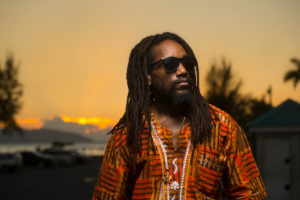
Outside the studio, sports help keep Kabaka grounded. There’s no over-romanticized image of meditating by the sea or secret rituals in the mountains—just the belief that a healthy body sustains a strong spirit. As simple as that.
Talking about reggae without mentioning Bob Marley is impossible. Yet Kabaka believes many people misunderstand Bob. “Bob Marley is clearly the greatest of all time,” he says,
“But I’ve always felt closer to Peter Tosh.”
This is where Kabaka finds his mission: keeping Peter Tosh’s spirit alive, while learning from Bob how to simplify messages so they reach more people. A balance of depth and accessibility—two qualities that rarely coexist easily.
From hip-hop, particularly Nas and Wu-Tang Clan, Kabaka absorbs the discipline of rhyme structure and lyrical technique. For him, technical precision and spirituality aren’t at odds—they amplify each other. There’s the meticulousness of a rapper within the soul of a Rastaman.
On the future of reggae, Kabaka sees it blending with other genres.
“I think that’s what we all want to see. There’s some concern that the younger generation isn’t connected with reggae’s vibe anymore, but I believe it will keep fusing with other genres until someone young and exciting brings back its original sound and makes it cool for the youth again.”
There’s optimism in his voice, a belief that evolution doesn’t mean losing roots but finding new ways to grow them.
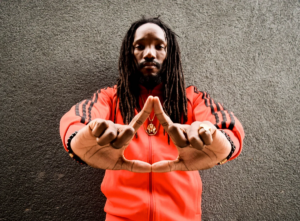
On collaboration, Kabaka admits he’s always drawn to traditional sounds from different cultures—as well as the talents of Southeast Asian artists. From reggae and hip-hop to world and traditional music, everything is open as long as honesty is at its core. For him, music is a bridge across languages and geographies.
And what about the Grammy, often seen as the pinnacle of a musician’s career? Kabaka doesn’t over-glorify it. Every moment, he says, has its own unique value. Some things happen only once in a lifetime and aren’t always comparable. A Grammy might be a peak, but the journey to get there is just as meaningful.
Beneath it all, there’s a small detail fans rarely know: Kabaka might spend more time watching soccer than listening to music. It’s a tidbit that breaks the serious artist image, revealing a warm, human side—a Grammy-winning musician who, like many, can’t resist a big weekend match.
And perhaps that’s the paradox and charm of Kabaka Pyramid: a “King” on stage, a thinker behind the lyrics, a soccer fan at home. His life blends spirituality, discipline, and a touch of humor—as if to say that even a king needs time to unwind before writing the next chapter of history through melody and words.
Kabaka Pyramid’s Singapore Debut: Reggae Unites the Region in One Vibration
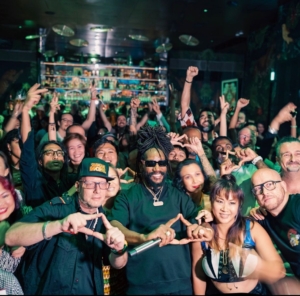
On September 6, 2025, Singapore witnessed a historic moment: Kabaka Pyramid’s Southeast Asia debut. Hosted by Singapura Dub Club in collaboration with Soul Vibes Asia and Dubshottas International, the event unfolded at the Jungle Ballroom in the Mondrian Hotel—an elegant city-center venue infused with an intimate atmosphere. The night was a cross-cultural celebration, with reggae as both a collective energy and a spiritual reflection.
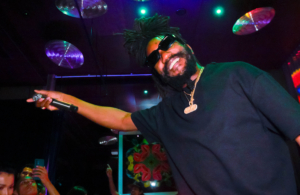
The evening kicked off with Indonesia’s Yella Sky Sound, whose original selections instantly set the reggae-dub vibe. The mood shifted to high gear with Shanghai’s Dubshottas International, delivering a dynamic set of dancehall dubplates bursting with energy. The intensity grew as DJ Justo—originally from Canada, now based in Singapore—brought charisma and seamless precision to every transition, drawing the crowd closer to the stage.
The excitement peaked when Masia One, the Far East Empress, took the mic with her fiery performance. But the true climax came when Kabaka Pyramid, the Grammy-winning headliner, opened his Singapore debut with “Nice Up The Dance,” marking a historic moment.
For nearly an hour, Kabaka guided the audience through a musical journey rich with meaning, closing his set with “Red, Gold, and Green.” His positive aura, humble demeanor, and warm smile made the night a collective experience, proving that reggae continues to thrive, transcend borders, and pulse with authentic vibrations.
(Source: Singapura Dub Club, Text: Keyko, Editor: Sam)




Show Comments