


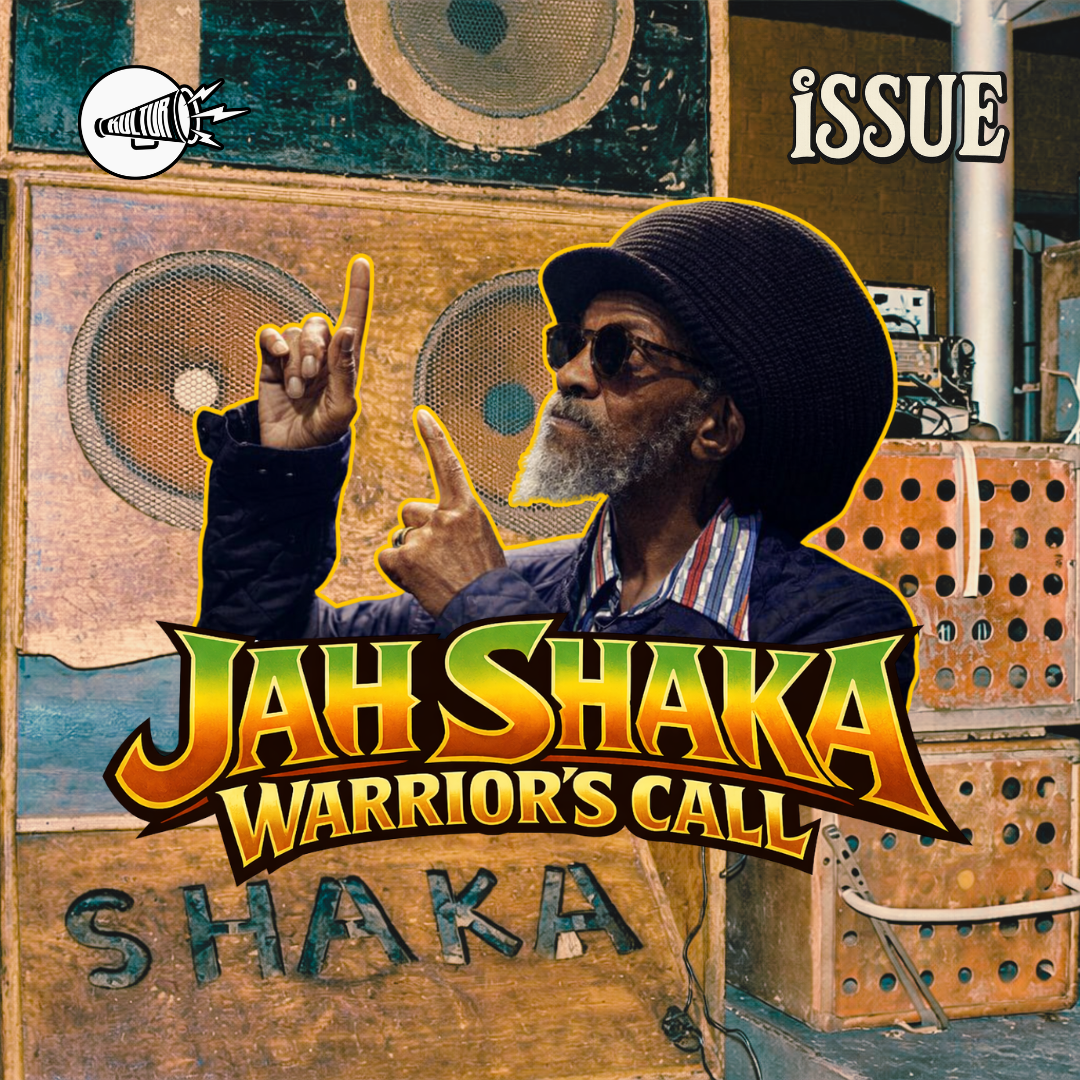
Prelude
In a Jah Shaka dub session, the reverb pouring from worn speakers is more than amplified sound — it is a medium. A space where sound sheds its original form and becomes something older, something deeper.
When the call of “Warrior” breaks into the air, it is not decoration. It is a summons. The bass that follows operates like a law of nature — unavoidable. It arrives in the chest before the mind has any chance to catch up.
At that threshold, listening to Jah Shaka becomes inhabiting Jah Shaka.
The Man and the Memory He Carried
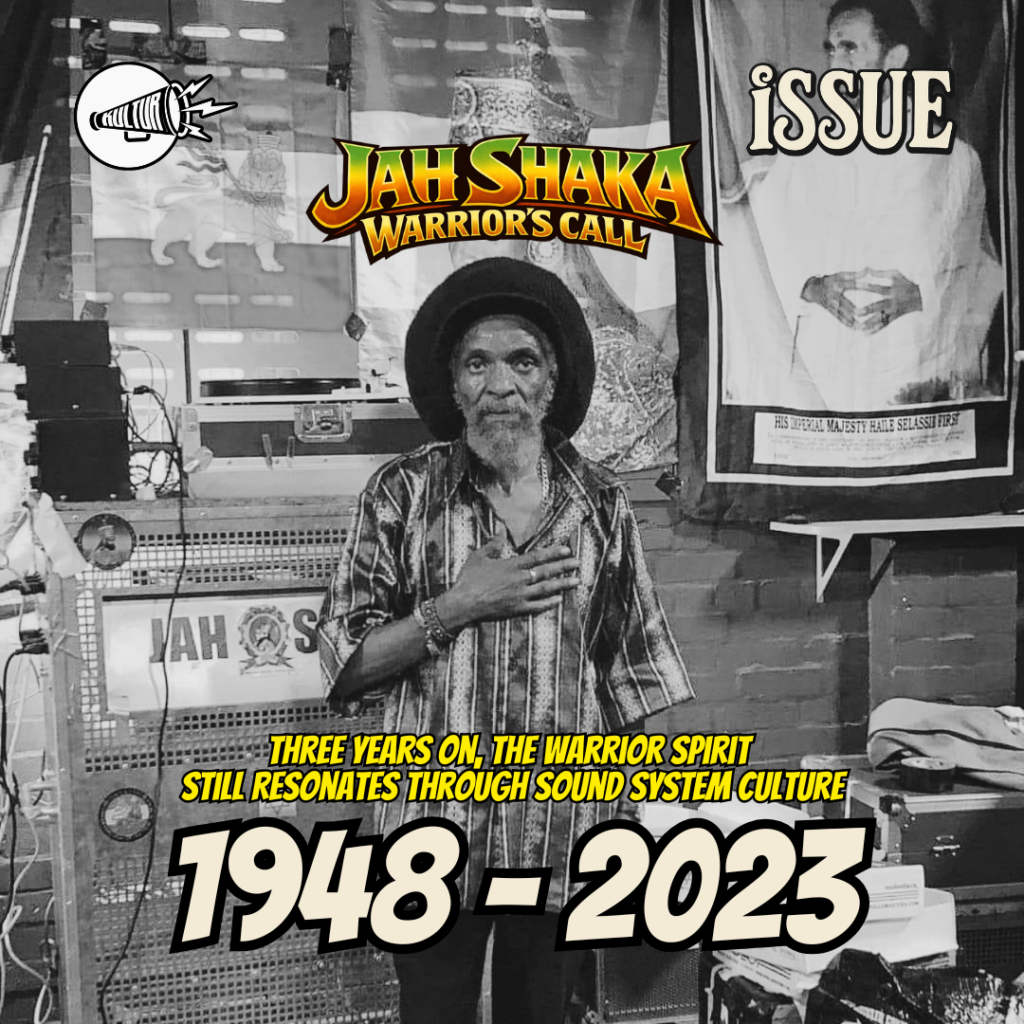
Shaka was born in Clarendon Parish, Jamaica, around 1948, and came of age in England under the long shadow of the Windrush generation. He was the kind of person who carries a place inside him — who transplants the memory of one culture into the bones of another. Into the rigid, frequently hostile terrain of urban Britain, he pressed the full weight of Caribbean inheritance. And within communities pushed to the margins, one thing remained beyond reach of those who marginalized them: the authority over their own sound.
The sound system was not just infrastructure. It was a declaration.
The Craft Becomes a Language
By the late 1960s, working alongside Freddie Cloudburst Sound System in South London, Shaka had already begun to understand that sound was not static — that it could move, and in moving, become force. The curation was rigorous. Frequency and bass-line were not aesthetic choices; they were vocabulary. And Shaka wielded that vocabulary with discipline, all while absorbing Rastafari philosophy not as ideological ornament but as a genuine perceptual framework. From that foundation, he redirected sound away from entertainment and toward something closer to the spiritual.
When he established Jah Shaka Sound System in the early 1970s, the full shape of that vision came into focus. He placed “Jah” at its center — a gravitational axis. “Shaka,” invoking Shaka Zulu, was something else entirely: a statement that sound could carry discipline, power, even militancy.
Warrior Style as Condition
By the late 1970s, Shaka’s approach had hardened into something uncompromising. Rhythms slowed and grew heavier. Frequencies descended into subsonic territory. Repetition became his primary instrument of penetration. He operated each session less like a DJ and more like a conductor of energy — each drop, each echo, each siren a form of pressure. An intervention.
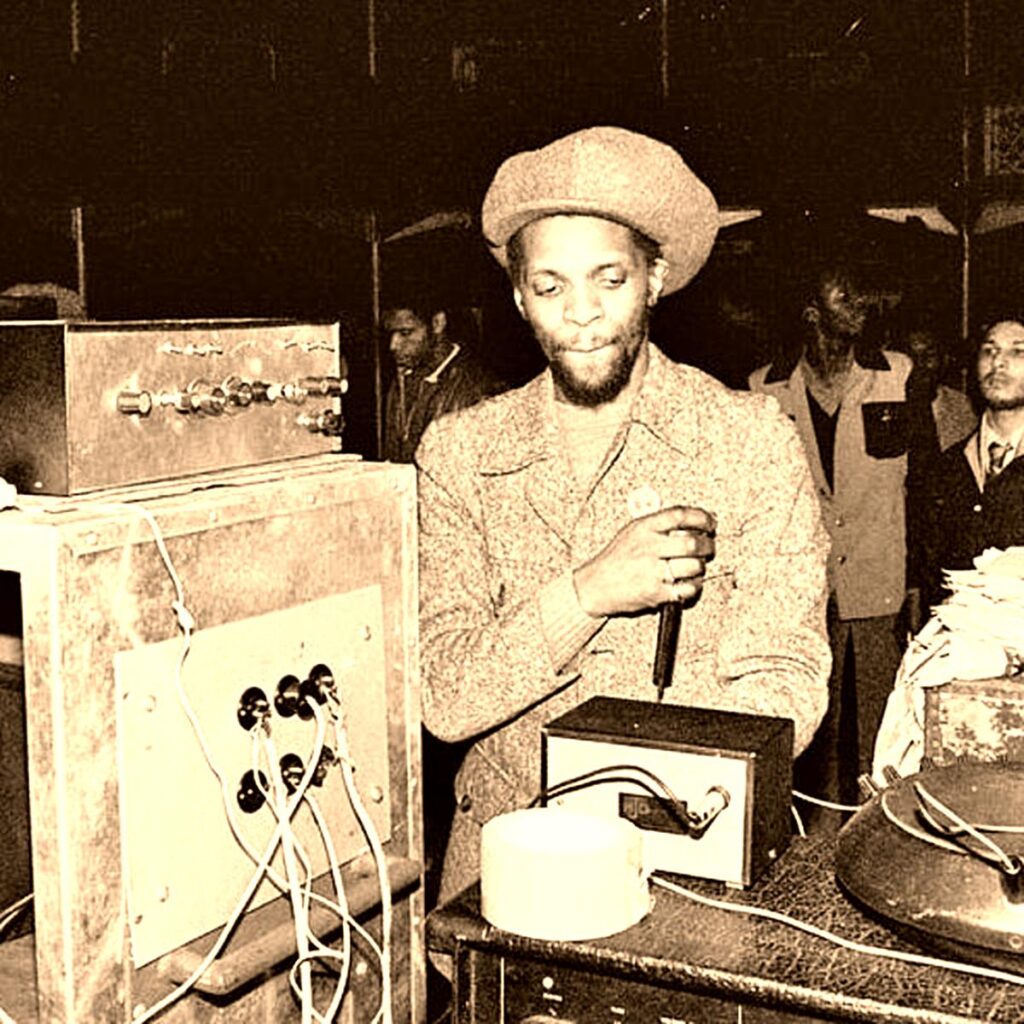
The 1980 film Babylon glimpsed this world, but even that document feels too narrow to capture what was actually happening: how a room could become a ritual space, how bass could dissolve the line between the individual and the crowd.
Against the Current
As other sound systems pivoted toward faster, more commercial dancehall through the 1980s, Shaka moved in the opposite direction — applying that same unrelenting pressure to analog equipment, carving out a depth and a signature that resisted easy imitation. It was original in the most complete sense of the word.
Dub lives in reggae’s bloodstream. Shaka’s dub is the bloodstream of experience itself.
Through his label, Jah Shaka Music, and records like the Commandments of Dub series, he extended his methodology — a whole philosophy of how sound thinks through music. Artists like Max Romeo, Johnny Clarke, and Prince Alla may not always have collaborated with him directly, but they moved in the same orbit: an ecosystem in which the sound system occupied the center of an industry, not its margins.
His collaboration with The Disciples demonstrated how that energy could survive the transition into recorded production — carrying the intensity of the live session into the studio without loss.
What Fire Cannot Take
When his home burned down in the early 2000s, Shaka lost a great deal — among it, objects that exceeded the ordinary category of archive. Yet he returned. Tour after tour, from Britain across Europe and into the Americas, he brought the one thing that does not burn: frequency.
His influence runs well past the borders of roots reggae. From the post-punk experimentation of Public Image Ltd and The Slits, to the bass pressure inside jungle, drum & bass, and grime — each borrowed something from Shaka’s underlying logic: that bass is both foundation and the epicenter of the narrative. Figures like Congo Natty and Don Letts understood this inheritance, felt its arrival slow and certain, the way all genuine legacies do.
In the end, Jah Shaka did not simply play music. He designed a structure — command over how sound is produced, how it moves, and how it lands in the body and the room. Physical experience, spiritual experience, collective experience: arriving not in sequence, but simultaneously.
And when dub builds a space like that, its resonance enters through the ears. But it keeps moving — reshaping itself into memory. Into identity.
The reverberant prayer in the bass that Jah Shaka set in motion — through his practice, his legacy, his frequency — continues to pulse, to knock, to turn.
To this day.
(Teks: Keyko, Editor: Sam)




Show Comments