


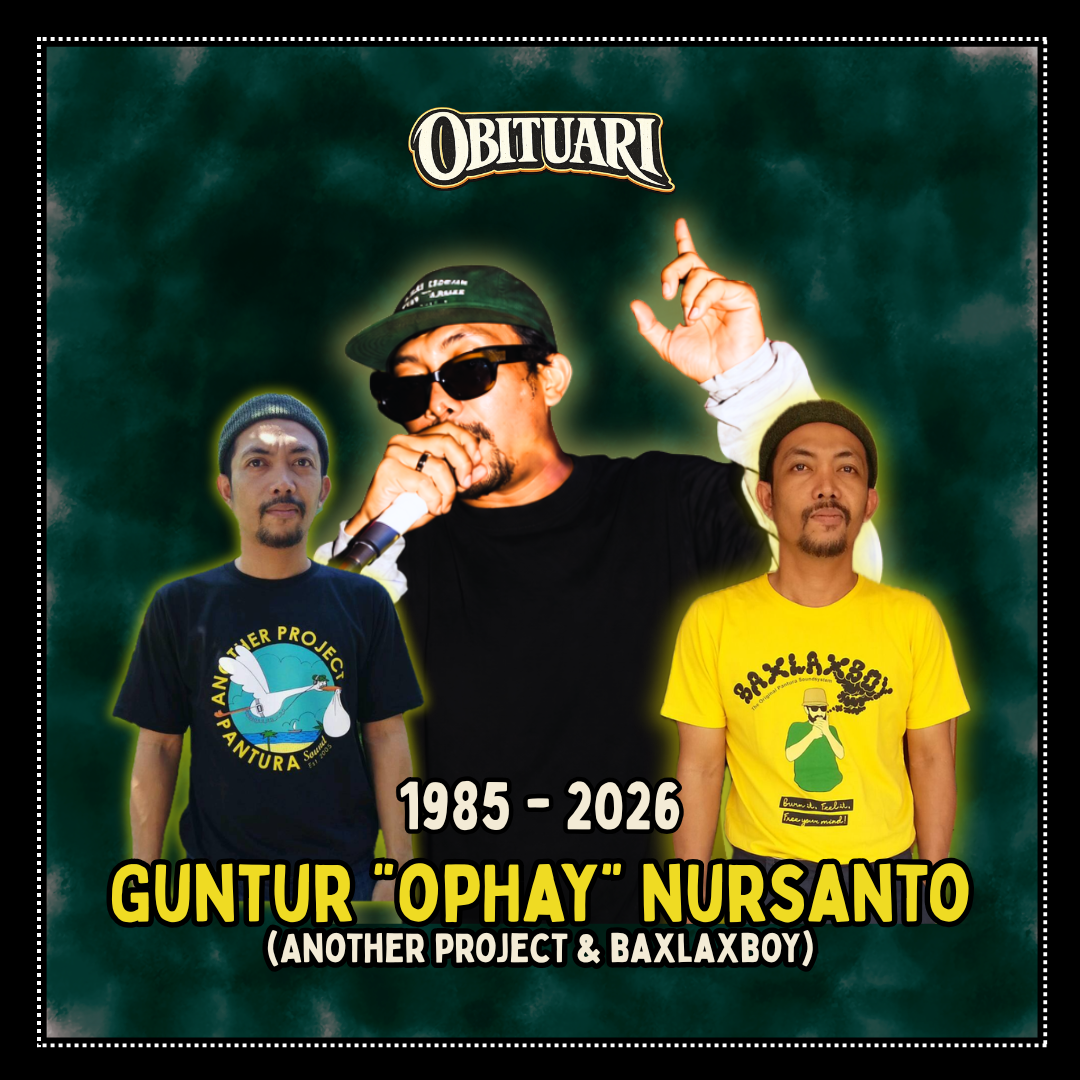
The dance floor has gone silent. Baxlaxboy, the one who always came, is no longer here.
For two decades he stood between the speakers. He crossed many rivers and many sease — Sumatra, Makassar, Bali — then crossed oceans to Hamamatsu, Nagoya, Osaka. As Baxlaxboy, Guntur ‘Ophay’ Nursanto became the keeper of dub’s flame in Indonesia. Unwavering, reliable, his basslines a guaranteed invitation to joy.
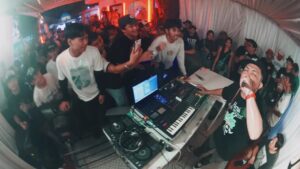
Cirebon gave him his start, and from there he did something most people never manage: he forged a sound with two souls. The moniker Baxlaxboy became the vessel for what he called — and what we at kultur.media, along with scenesters across the country, recognized — the “Original Pantura Sound.” A hybrid that shouldn’t have worked, and was too good to ignore. It wasn’t fusion. It felt more like a discovery — something that had always been buried in the ground, waiting for someone smart enough to dig it up. With Another Project since 2005, he planted his flag in Cirebon when the city hadn’t yet made up its mind about this kind of music. He didn’t go looking for easier ground. He stayed. And he built.
One foot in King Tubby and Mad Professor. The other in the Pantura — and he never let you forget it. From that tension, he built a dance formula that genuinely delivered: melodies that lodged themselves in your body, grooves that drove the room, lyrics that wrapped party stories inside something that sounded almost like a powerful mantra.
One story deserves to outlast the night it happened: Ophay once took over a “Melekan” — the Cirebonese tradition of staying up together through the night, typically soundtracked by music the crowd already knew — and replaced it with Bob Marley. Nobody walked out. Nobody resisted. They nodded. They moved. He led, and they followed without question.
Before Baxlaxboy, dub in Indonesia lived in exactly two places: in the bedroom, the hard drives, or as ambient noise at parties in Jakarta and other major cities. It had never been a journey. It had never been an identity. He changed that. “Titik Ketinggian” became an anthem on every floor he lit up; “Life Is Free” and “Have a Nice Dream” were the load-bearing walls of the thing he built, slowly, over years. Because of what he did, Indonesian dub could finally be heard resonating through the far districts of Makassar. He carried it away from the center, away from where the industry was looking.
Yella Sky Sound, one of his closest sound allies, said it plainly: “Baxlaxboy is the star who quietly brought dub back home. Grassroots. He’s the original Dubstar!”
His most devoted fans pushed him forward, and he led them in return — a congregation that danced. He became the most in-demand dub act in the country, moving from city to city in a run of gigs that never seemed to stop. Somewhere along the way, without fully realizing it, he had become a catalyst — the force that bent the direction of Indonesian dub.
Magixriddim, one of his fellow frequency conspirators, puts it this way: “Opay BaxLaxBoy — a militant Jamaican Sound Boy operating in Indonesia. What I remember from the early days: Baxlaxboy performing in Surabaya, showing up full force, no thought for budget or logistics, sometimes not even sure where he’d sleep. For him, dub was always about whether the music could reach that ‘point of elevation’ inside whoever was listening.”
He never held out for a proper stage. He arrived in cities that didn’t know his name, in rooms that weren’t ready, for ears that didn’t yet know they were waiting. The riddims and basslines he played collided with a synthesizer soaked in the dark sensuality of the Pantura coast, and the result was memory — memory built inside bodies in motion on a dance floor. The kind that doesn’t fade just because the person who made it is gone. His influence has spread too far for that. It has become a map that the new generation is using to find their own way.
One of his releases was called “Gonna Make It.” Well — you did, comrade.
What’s unfinished is us. Still learning to live without that bass pulling us in, without the purity hiding inside the simplicity of his synthesizer work.
The fire he started is burning again.
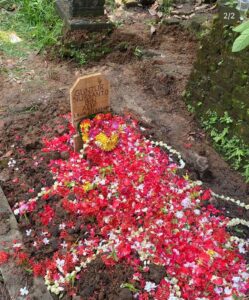
Rest In Power, Ophay. Thank you for keeping the dub energy alive in Indonesia. Your spirit is the guarantee it stays that way. And if it ever dims — we’ll burn it back to life.
With grief, All your comrades at kultur.media




Show Comments