


Authentic or Fake?
The problem of authenticity is still an issue that always comes up in the reggae music scene. Although they are two different things, reggae became synonymous with the Rasta spiritual movement through figures like Bob Marley, Peter Tosh, and Bunny Livingstone. Initially, conservative Rasta elders opposed reggae music which was considered secular and degraded Rasta spiritualism. However, on the other hand, many argued that reggae became an effective and efficient media for Rasta resistance and dissemination rather than sermons and pamphlets. Reggae is claimed to be music of the ‘sufferah’ (the oppressed). It is a revolutionary music whose presence represents the post-colonial spirit of 400 years of slavery. A counter hegemony of ‘Babylon.’ But over time, the process of massive exposure to it has implications for appropriation that are inevitable and becomes a debate that continues to this day. The discourse on authenticity in reggae is often paradoxical and problematic.
Under the capitalist corporations of the music business (record labels, EOs, Tourism) reggae music suffers the logical consequences of its popularity. At the beginning of its emergence, Jamaican musicians were mostly ‘rude boys’ or poor youths from the ghetto who negotiated their idealism in an effort to get out of the economic squeeze. They eventually had to be pragmatic towards the predatory side of the music industry that exploited their cultural capital. But despite the polemic of prejudiced relationships between the artists and the music business stakeholders, reggae finally went international. Record labels at that time such as Lee Perry’s Trojan, Danny Sims’ JAD, and especially Chris Blackwell’s Island records tried to package reggae in such a way that it could be accepted by the general audience. Although it was widely opposed, in reality there was a symbiotic mutualism relationship, like a beetle and a flower. Each needs the other to survive. The beetle needs pollen as its food and the flower needs the beetle for its reproduction.
Furthermore, the post-colonial spirit brought by the Windrush generation contributed to undermining the slave master’s hegemony right at the center of his power. Jamaican popular culture such as sound system, ska, rocksteady and reggae made the white British working class fell in love with it and influenced the emergence of skinhead, the mods and punk subcultures. This phenomenon of cultural contact gave birth to a new gaze through the emergence of 2 tone ska or ska-rock by groups such as The Specials, The Selecter, Madness, and the Beat. This sparked various developmental processes that continue to occur such as the sound system echo from Notting Hill Carnival to underground parties to become a melting pot that melts racial rigid boundaries that gave rise to dubstep, drum and bass, jungle to loversrock. England has indeed become reggae’s gateway to the world.
Meanwhile, in the United States as a global market barometer, reggae did not receive a positive response. In Roger Steffens’ book, Bob Marley was overwhelmed to convince the American audience, especially the black community who were less responsive to reggae. Various strategies were carried out, starting from reappointing Danny Sims as a manager, becoming the opening band for the Commodores, infusing disco elements into his repertoire (‘could you be loved’), and even willing to pay for airtime on black radio stations.
Another fact shows that reggae is welcomed by white audiences outside Jamaica. The appropriation process by white musicians such as The Specials, The Police, Erick Clapton and UB 40 has helped the reggae culture spread worldwide. Less than a decade after Marley’s efforts, the third wave of ska revival hit America and gave rise to bands such as No Doubt and Sublime. An achievement that had inevitable consequences.
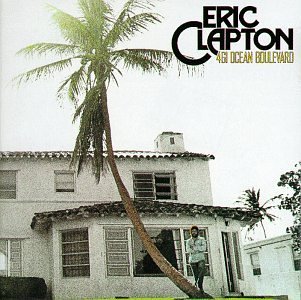
The process of commodification and exposure of white Euro-American audiences shows a tendency to adopt material that is oriented towards the aesthetically pleasing surface quality of reggae rather than explicitly political or deeper musical content. Conscious reggae is considered too heavy for those who want something more easy listening and light on the dance floor. In addition, the thick patois language has made the non-Jamaican listeners fail to understand what is being sung. Many just fetishize the musical and performative style without paying attention to the message. In addition, liberal ideology has co-opted the revolutionary militancy of pan Africanism in reggae. The rebellious attitude and spirit of Africa Unite is transformed into a peace-loving music of universal unity. UNESCO has even designated reggae as an intangible cultural heritage in 2018 because of these universal values. Meanwhile, the Jamaican government itself has used adjustment tactics to turn reggae and Rasta into exotic Jamaican culture that attracts tourism. The cover of Erick Clapton’s album 461 Ocean Boulevard which contains the track ‘I shot the sheriff’ features a coconut tree as its visual text highlight. This visual emphasis assimilates a tropical symbol that identifies the appealing side of sonic reggae as beach and leisure music. A resonance of imagination that continues to this day.
Digital Era Expansion
Bob Marley’s death in 1981 marked the transition of the organic roots reggae to the digital era. Technological advances have facilitated the replication of reggae mechanisms, paving the way for the revival of sound system culture and the emergence of digital subgenres such as dancehall, which is energetic and fast with provocative, crude and often vulgar lyrics. For a detailed review you can read the previous Kultur issue about dancehall.
Some assume that the application of technology (drum machines, sequencers, samplers) and various indulgent plug-ins create soulless and homogenized music fabrication. Reggae aesthetics is fragmented and shows the disintegration of reggae texts. This is also an excess of commodification, where reggae is performed in a variety of different tastes and ways so that it is accused of ignoring its roots and its deeper meaning and function. But on the other hand, ontologically, this shows the unstoppable nature of cultural fluidity, a process of becoming that becomes the breath of all existence including music. It is how to see the spread of reggae in a more contemporary view, which is not arborescent, a tree that has roots but sees it more like a network of rhizomes that spread in all directions.
Social Media Era
This rhizome logic could very well describe the development of information and communication technology. How everything can be quickly absorbed and disseminated through social media platforms. We are entering an era ruled by the algorithm regime, where society is stratified not by social class but by the number of followers and viewers. People are competing to get a wide range of exposure in order to be hype or viral. This is very influential and dictates the way everything works including the process of creativity and production of reggae music. Identity becomes vague and easily changes quickly. For example, reggae fans will wonder, how can Burnaboy be included in Summerjam’s lineup and stand side by side with reggae roots legend like Steel Pulse but then discredit them? The Afrobeat phenomenon is indeed becoming a trend that rivals the popularity of dancehall and has even far surpassed roots reggae. This shows the gap and discrimination as an excess of the algorithm regime. The message is less important than the sensations and the number of followers and viewers.
Reggae in Indonesia
It needs to be acknowledged that the type of reggae that reached Indonesia and its development until today is also the result of co-optation and polarization from the Euro-American music industry that is devoid of political, spiritual and revolutionary connotations. The exposure process of Indonesian people to reggae since the beginning (1980s-1990s) was obtained from the curation of media (electronic and print) with commodity bias through apolitical non-Jamaican artists. The militancy side of reggae was depoliticized by the market since it crossed over outside its territorial sacredness, giving birth to various pseudo-reggae music such as reggae-pop, reggae-rock, reggae-disco, to reggae-hip-hop. Reggae is considered as something fun and suitable for dancing as Melky Goeslauw and Nola Tilaar sang, “Mari dansa reggae” (Let’s dance reggae).
In addition, reggae in Indonesia is also interpreted as a unifying and peace-loving music, reducing the potential for conflict in a diverse society through the motto ‘Bhineka Tunggal Ika’ (Unity in Diversity). A figure who continues to echo peace with reggae-ethnic music is Mas Tony Q.
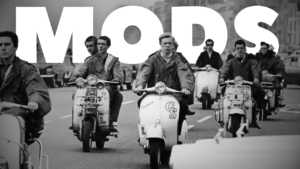
In addition to ethnic music, Indonesians are generally fond of pop and rock music so the fusion of reggae with these two genres is more friendly to their ears. The band Steven & Coconuttreez is a perfect representation to illustrate the reggae-rock fusion that is so popular and a role model. In addition, Indonesians are also very fond of ska music for the reasons mentioned above. In Dick Hebdige’s book, the history of reggae’s influence on the subcultures of skinheads, the mods and punks that present 2-tone ska makes this music also identical with fashion and style such as riding scooter motorbikes (Lambrettas and Vespas). Groups like Tipe-X, Shaggy Dog and Souljah can more or less represent ska-rock fusion.
The digital age has boosted the popularity of hip-hop (rap) music. This music is dominating the global mainstream music including Indonesia. This also affects the fusion of reggae with it. Reggae-hip-hop fusion has indeed become a kind of default creativity in music for people in eastern Indonesia, especially in Papua. Musicians like Epo de Fenomeno and One Scoot are representative examples of reggae-hip-hop fusion. Although in reggae itself there is a dancehall that inspires and is inspired by hip-hop (rap), it is less popular in Indonesia. One of the Indonesian artists who has consistently brought the dancehall since 2005 is Ras Muhamad. Lately, the reggae scene in Indonesia has started to show a tendency to move towards sound system culture, giving rise to various new experiments and explorations such as opening collaborations of reggae, dub, dancehall and hip-hop. Names like Radith Echo man and Yellasky Soundsystem are the driving force in this area. The latter has even collaborated with big names like Eek Mouse and Mykal Rose.
Word, sound and power
The tendency to interpret reggae as leisure and pleasure music has made people in general, including in Indonesia, neglect the real aesthetics of reggae. There is nothing absolute to define reggae, but if you look closely, there is a main characteristic besides the musical dimension of skanking rhythm, which is the extra-musical dimension. Reggae is the only popular music genre that is basically religious and spiritual music. This comes from the philosophy of reggae which consists of three main elements, namely word, sound and power.
These elements highlight the transformative potential of language, music and the impact of combining the two. How carefully chosen words, combined with powerful rhythms and melodies, can inspire social change, spiritual awakening, and empowerment or agency – both individually and collectively. Words specifically refer to Bible verses or phrases and Jamaican proverbs that are often used in Rasta philosophy and vocabulary, known as “dread talk.” Rasta believes that words have power and truth capable of both creation and destruction. It is about the conscious use of language as a weapon to convey messages of resistance, hope and passion. Meanwhile, sound refers to ‘riddim’, which is a sonic element consisting of rhythm, melody, and instrumentation that conveys a lyrical message. Reggae riddims are designed to captivate, unite, foster a sense of connection, and provide a spiritual experience. The messages in reggae lyrics are filled with biblical allusions related to the reality of its society, such as the Exodus, repatriation to Africa, Haile Selassie as the living God, and slavery in ‘Babylon’. The word ‘Babylon’ is the antithesis of ‘Zion’ in Rasta terminology or philosophy, which refers to the Western world order and all its corrupt and oppressive systems.
Food for thought
Reggae music is marketed globally, transcending national boundaries and moving from one place to another like a rhizome plant. Various forms of localized reggae rhythms and lyrics build and reflect local economic, social, and political histories, struggles, and place-based identities. Reggae music, although originating from social and historical concerns in Jamaica as its place of origin, also participates in the formation of global cultural forms through the dialogue between local influences and characteristics with other cultures.
The rapid development of technology and massive production and consumption has indeed impacted reggae music as a commodity, resulting in a shift in reggae’s values as a spiritual and revolutionary music. This triggers a debate, but from another perspective, cultural phenomena are always fluid where movement and change are always the inevitable laws of the universe. This indicates an ongoing process of becoming. Adaptation is the way to deal with it so that it can continue to flow without forgetting its main essence in order to arrive at the mouth of soul-enriching awareness.
(Yedijah)




Show Comments