


I
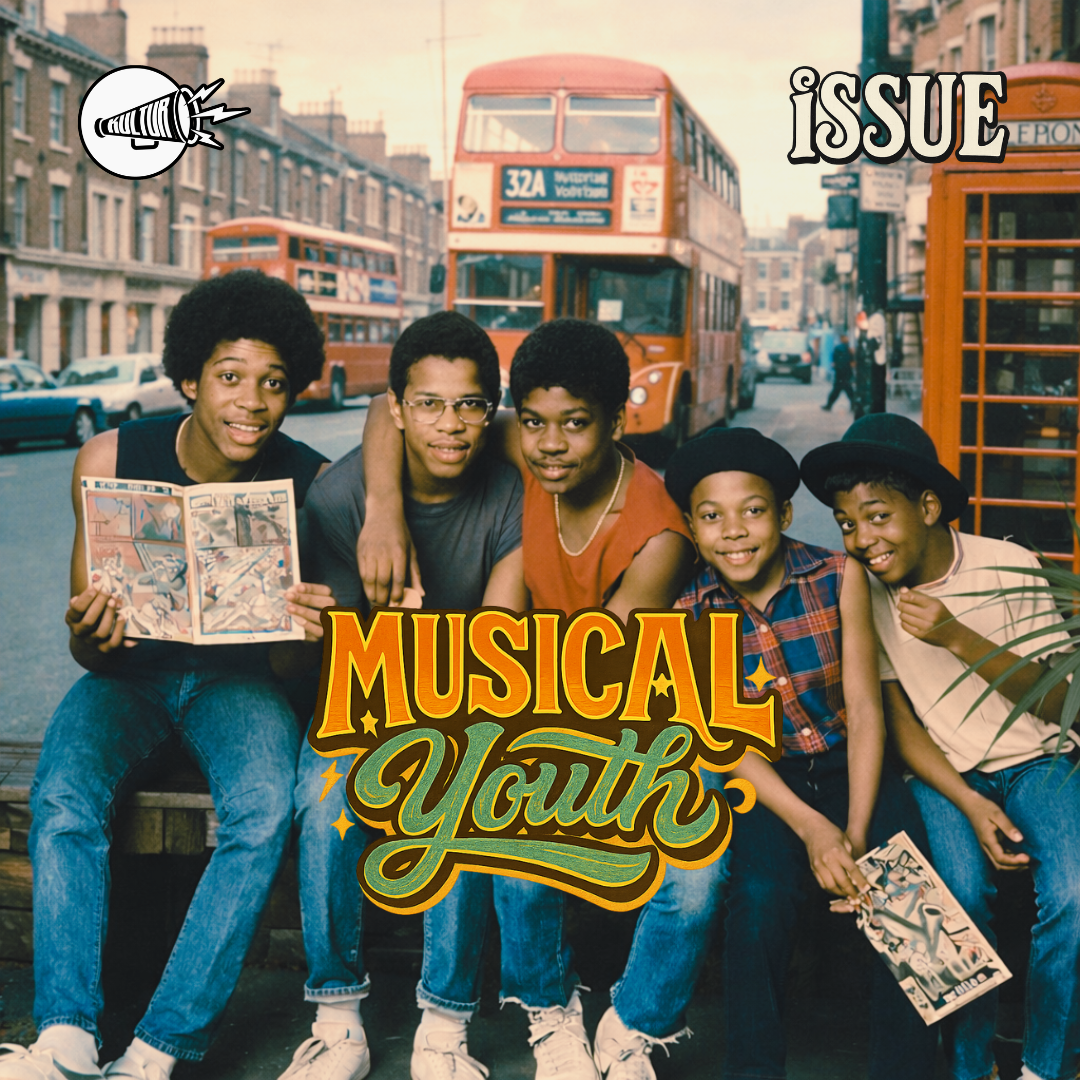
Britain in the 1980s was quietly falling apart at the seams. The factories had gone dark, the jobless queues stretched longer every month, and racial friction was no longer an occasional crisis — it was just Tuesday. In Birmingham, wedged between derelict steelworks and back-street alleyways, a handful of teenagers from the Caribbean community carved out a space that the establishment had never thought to offer them.
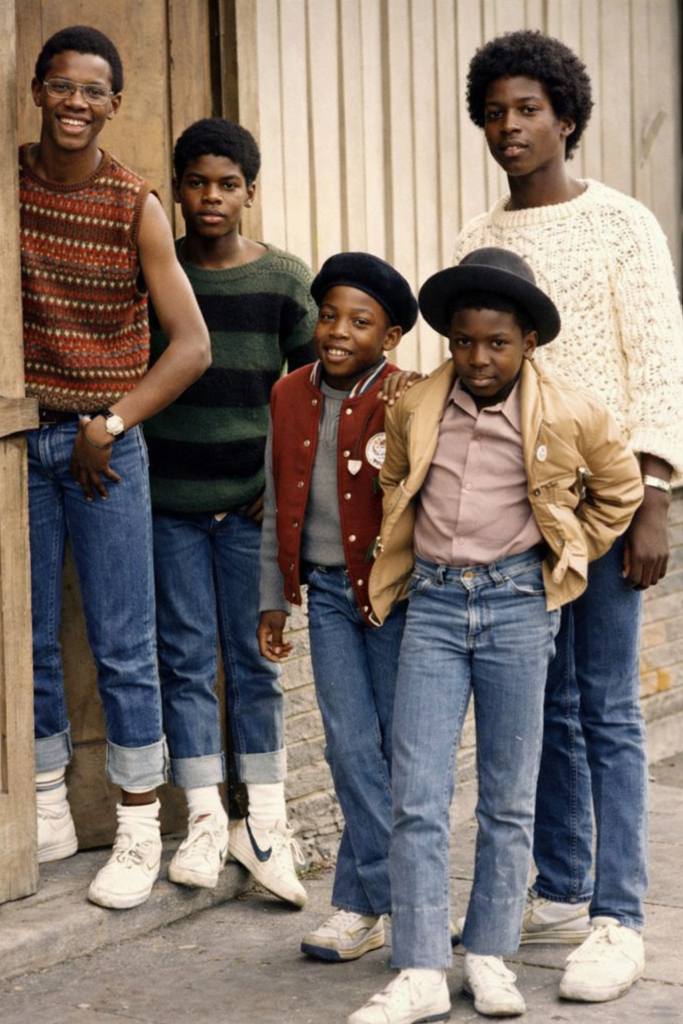
Out of Nechells — one of the city’s rougher corners — came five schoolboys, the oldest barely sixteen, the youngest just eleven. No manifesto, no master plan. Just a battered guitar, a keyboard, and a drum kit played by hands still dusted with classroom chalk. What they brought to the world’s music industry, nobody had predicted.
They called themselves Musical Youth.
From the outset, the business of music tried to shape them into something safer. MCA Records insisted the lyrics of “Pass the Kouchie” — which nodded openly to cannabis — be rewritten as “Pass the Dutchie,” scrubbed clean for radio play and young ears. The label pushed the band toward a brighter, more sellable sound, one that could find traction in the American mainstream. Their debut album struck a cautious compromise: toned-down lyrics, an approachable texture. By the time their second record, Different Style!, arrived, the pull toward polished R&B-pop had become impossible to ignore.
The voice at the front was Dennis Seaton’s — and it was unlike anything the charts had heard. Unguarded and entirely without performance, it carried feeling straight to the listener without detour. Behind him stood Michael Grant and Kelvin Grant, the rhythmic and melodic engine of the group, and the Waite brothers — Freddie Jr. and Patrick — sons of Freddie Waite of The Techniques, one of Jamaica’s most storied vocal groups.
II
To understand Musical Youth, you have to go back further than Birmingham — all the way to the back streets of Kingston in the late 1940s, where sound system culture was born out of necessity. Stacked speakers. Borrowed generators. The whole apparatus was a kind of street-level power: a way to claim the night, fill a yard with people, and say out loud what daytime didn’t allow.
When the Windrush generation sailed into England with their luggage and their record collections, that culture made the crossing with them. In Birmingham, the sound system became the pulse of Caribbean community life — not as entertainment exactly, but as oxygen. When the factories turned people away, when the landlords posted their signs, when the club doors stayed shut, the sound system was still there: a circle of bodies, shared music, the feeling of not being invisible.
Musical Youth were children of that world. They absorbed it naturally, the way you absorb the language spoken in your home — and then they carried its frequencies into places it had never reached before.
Yes, the label filed down their edges, swapping “kouchie” for “dutchie.” But innocence, it turned out, was its own kind of amplifier. The unspoken came through anyway:
“So I left my gate and went out for a walk”
(How does it feel when you’ve got no food?)
III
“Pass the Dutchie” was assembled from pieces of other songs — the skeleton of The Mighty Diamonds‘ “Pass the Kouchie,” the pulse of U-Roy‘s “Rule the Nation,” a thread from U Brown‘s “Gimme the Music” — stitched together into something that felt entirely its own.
It didn’t creep up on anyone. The song detonated. Within weeks it sat at number one in the UK, and before long it had climbed to number ten on the American Billboard Hot 100, moving millions of copies along the way. The video — helmed by Don Letts — quietly made history as the first Black music video to enter regular MTV rotation, arriving on those screens months before Michael Jackson did.
On the surface, the track was breezy, almost playful. Underneath, it was carrying weight — the social fractures of Thatcher’s Britain, the daily grind of communities that the mainstream had decided not to see. Five grinning schoolboys from Birmingham walked into living rooms across the world and slipped fragments of sound system philosophy past the gatekeepers, right into the centre of pop culture.
They never raised their voices. They never wrote a manifesto. And yet the hunger in the lyric landed — felt even by listeners who had never known it themselves. The irony was almost elegant: reggae, a music with revolutionary fire in its bones, chose to whisper rather than shout — and the whisper carried further.
IV
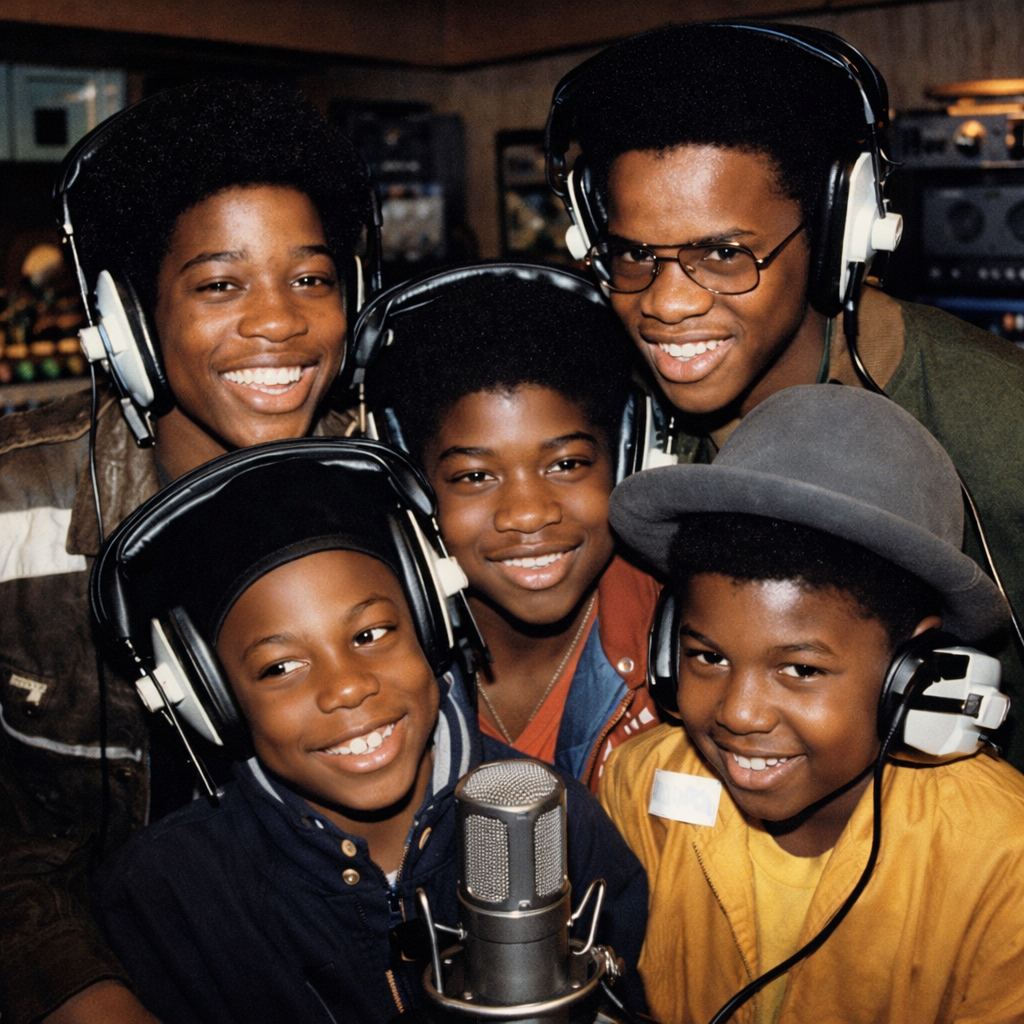
Success at that scale, arriving that fast, leaves little room to breathe. Different Style! (1983) was the band’s attempt to hold onto the momentum: smoother production, a softer musical palette, a deliberate tilt toward American R&B-pop. The audience wanted lightning to strike twice, but the boys from Nechells were still too young — in every sense — to see what the industry was doing to them. Their voices were changing. The novelty of child performers had a shelf life. The internal fault lines were widening.
By the middle of the decade, it was over. Dennis Seaton walked away in 1985, and what remained was the unglamorous aftermath: kids from a working-class Birmingham neighbourhood stepping back out of the spotlight and into ordinary life, with no real map for how to get there.
Patrick Waite’s story became the saddest footnote. In 1993, at just 24 years old, he died of a hereditary heart condition — in a waiting room, ahead of a drug-related court hearing. Behind the bright, radio-friendly surface of the “one-hit wonder” myth, real lives had come undone long before they had the chance to solidify.
V
“Now me say, listen to the drummer, me say listen to the bass
Give me a little music, make me wind up me waist”
Their debut album, The Youth of Today, arrived as a gold-certified record, earned them a Grammy nomination, and brought them — improbably — into the orbit of Michael Jackson himself. And yet the music industry’s memory is short and its appetite is shorter. History filed Musical Youth under “one-hit wonder” and moved on. Fifteen months of blazing attention, then silence. Five kids from Birmingham: picked up, used, and set back down.
But the ledger doesn’t quite close there. In those fifteen months, they did something that mattered: they carried the sound of the Caribbean diaspora onto MTV screens that had never made room for it. They proved that a community long pushed to the margins could walk into the centre of global pop culture — not through confrontation, not through revolution, but through music that was simply, undeniably, real.
They didn’t storm the gates. They just played. And the mark they left, didn’t fade.
(Teks: Keyko, Editor & Translation: Sam)




Show Comments