


Book Of Genesis
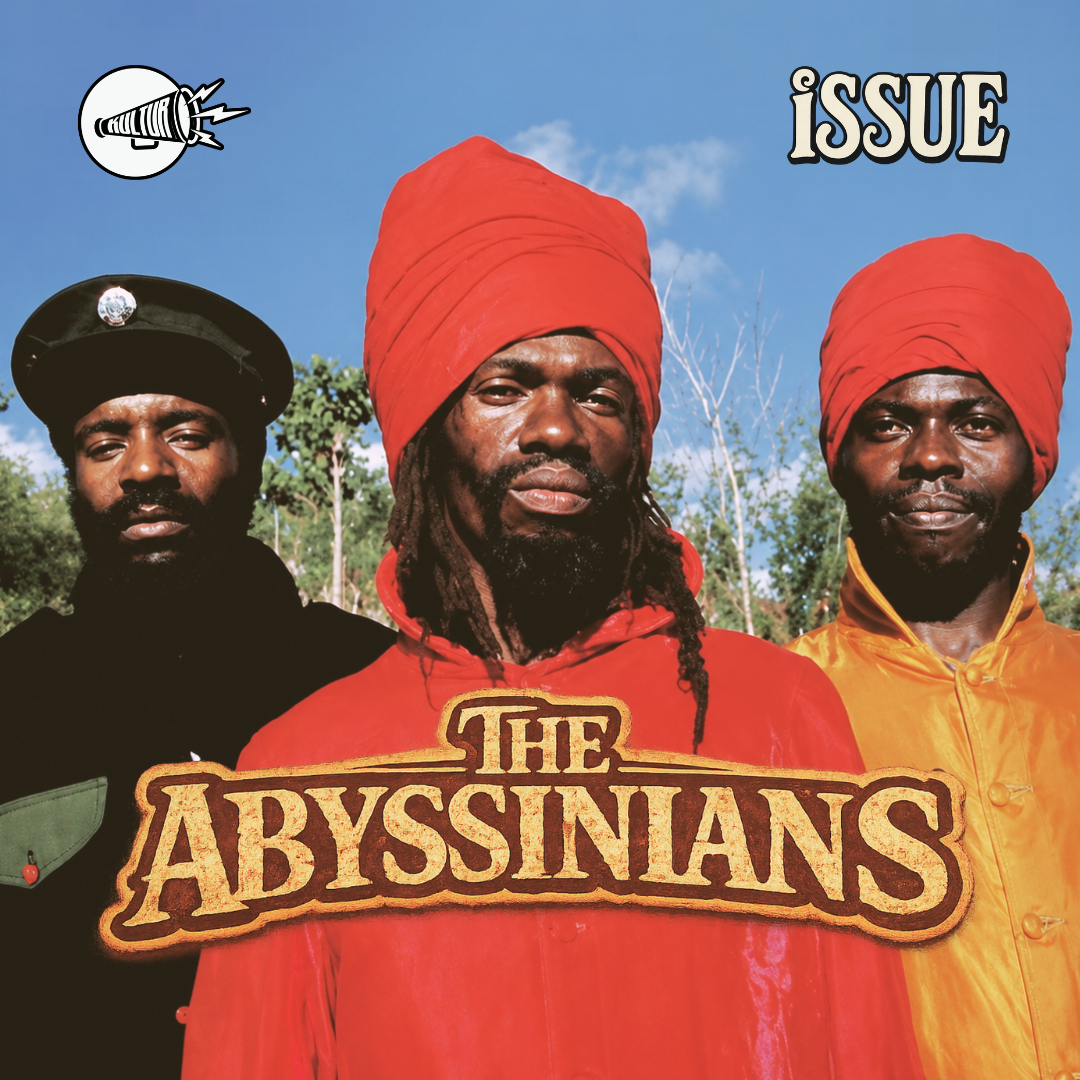
Bernard Collins and Donald Manning started singing together in Jones Town — an inner city in the heart of Kingston — in 1968. The starting point of what the world would come to know as The Abyssinians. Donald then brought in his younger brother Lynford, who had already been sharpening his vocal harmonies alongside their eldest brother, Carlton Manning of Carlton & The Shoes.
Carlton trained the trio in a minor chord harmony style that became their signature. He also taught Donald to play guitar — a role that carried serious weight. A mentorship that sits in the same category as Joe Higgs‘ influence on The Wailers.
The name they chose already said everything — a solid identity that would navigate reggae history in Jamaica. Abyssinia is the ancient name for Ethiopia, and in Rastafari tradition, Ethiopia is Zion: the spiritual center of the African diaspora.
A Spiritual Hymn in a Popular Constellation
March 1969. They walked into Studio One and recorded “Satta Massagana.” In the Amharic language of Ethiopia, the phrase means “give thanks and praise.” The structure runs slow, repetitive, meditative — parts of the lyrics sung in Amharic. At the time, it sounded foreign in a Jamaican recording industry that still largely revolved around love songs and urban life.
Clement “Coxsone” Dodd heard it and chose not to release it — too little commercial potential. But The Abyssinians bought back the master recording, founded the Clinch label, and released “Satta Massagana” independently in 1971.
The song spread through Jamaica’s Rastafari community without a label strategy. Word of mouth, spiritual gatherings, Nyabinghi rituals, and dance floor to dance floor. The riddim became one of the most covered in reggae history — from Big Youth to Dillinger and dozens of others.
In 1975, Clive Hunt circulated a limited white-label edition of the album. A year later, the first official Jamaican release arrived through Penetrate, followed by a US release through Jam Sounds. The album “Satta Massagana” carried “Declaration of Rights”, “Forward Unto Zion”, “African Race”, “Abendigo”, and “I and I” — a spiritual document consistent from the very first note.
“Satta Massagana” chose its own destiny. Rather than becoming a market-oriented record, it became the foundation and history of spiritual reggae.
The Spiritual Language of “Declaration of Rights”
As Jamaica moved through the turbulence of the 1970s — widening economic inequality, hardening political conflict, and a growing Black consciousness across urban communities — reggae stepped up, embracing social, spiritual, and identity questions. In that context, “Declaration of Rights” landed as a firm statement: human dignity and the right to live are worthy of music.
Even the arrangement attached that equality. African diaspora gospel tradition and modern Jamaican reggae structure shared the load evenly. Vocal harmony in the spotlight, held up by a bassline and a minimalist guitar that gave just as much as they needed to.
Vision Through Turbulence
The Abyssinians faced a familiar problem for Jamaican musicians: disputes over the group name rights and catalog distribution. The Jamaican music industry of the late 1970s and early 1980s ran on a system that frequently left musicians in a weak contractual position.
But the music kept moving — no industry approval required. Japan, the UK, Europe, and the United States became new homes with ears ready for what The Abyssinians carried. Vinyl collectors, sound system communities, and dub musicians kept the circulation alive across generations. In 1993, Heartbeat Records made that fact official — releasing “Satta Massagana” with four bonus tracks, putting a new generation in front of a history that nearly never made it out.
The Legacy of The Abyssinians
Lynford Manning passed away on June 25, 2024, in Miramar, Florida, at nearly 80 years old. After leaving Jamaica in 1980 and turning to Christianity, he stepped away from his musical career and spent more than three decades as a devoted church member. His passing closed one chapter of the original trio that recorded “Satta Massagana” at Studio One over fifty years ago.
“Satta Massagana” still plays today. At reggae festivals, dub sessions, and sound system gatherings across the world. Proof that some works are not born for their own time — they arrive ahead of it, and keep rolling from generation to generation. The Abyssinians are a history the industry rejected, accepted by the world through collective decision — until the industry itself had to acknowledge the immense value sitting inside that work.
Once again, they did all of that fifty years ago!



Show Comments