


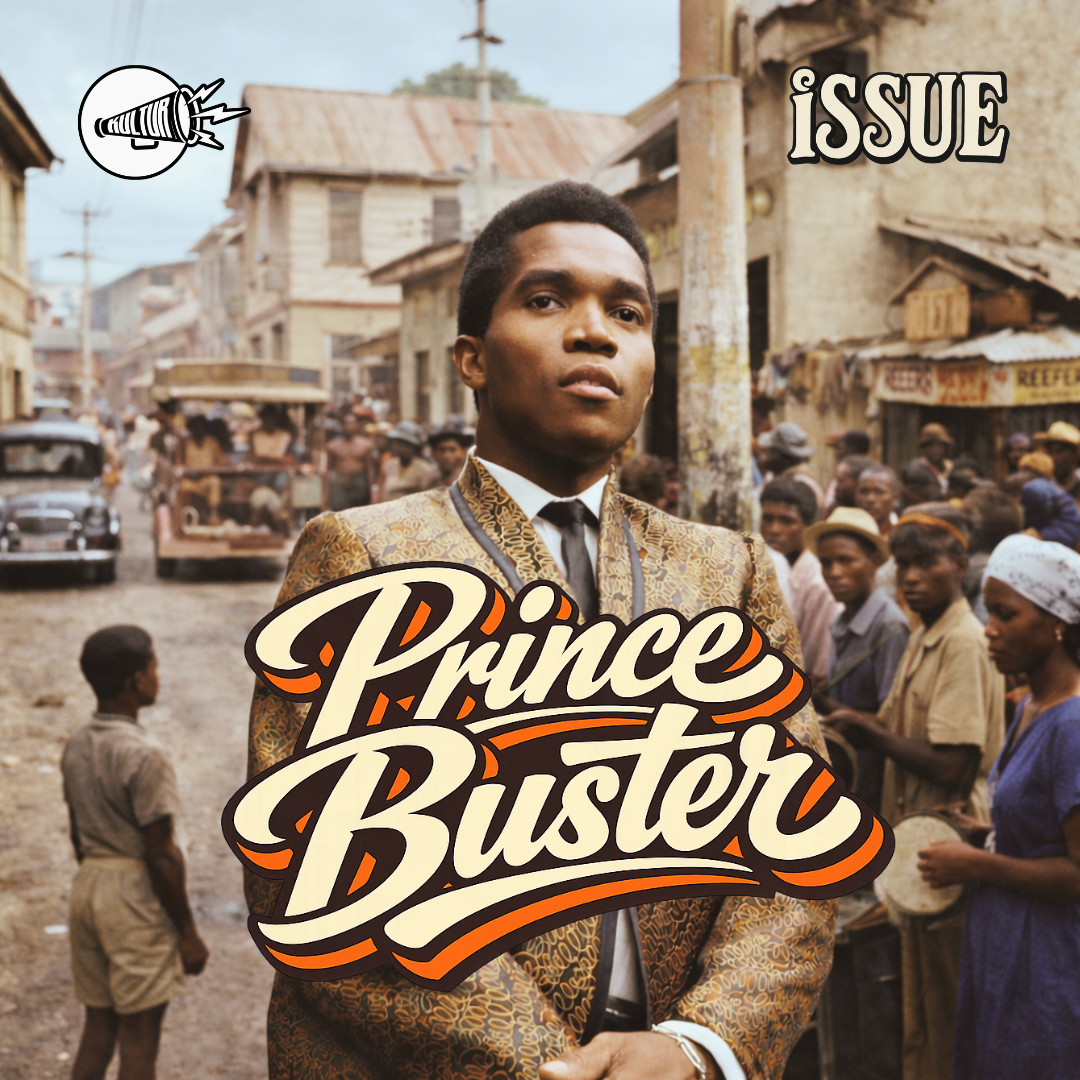
In the late 1930s, Kingston had no word for what it was doing. Music didn’t come from studios or labels — it grew out of streets, dark alleys, backyards, and the tight-knit hum of communities pressed together by poverty and possibility. That’s the world that produced Prince Buster, born as Cecil Bustamante Campbell on May 24, 1938. Even his name was a statement: borrowed from Alexander Bustamante, one of Jamaica’s most towering political figures. It wasn’t a casual choice — a name like that arrives already weighted with history, already sounding like a position.
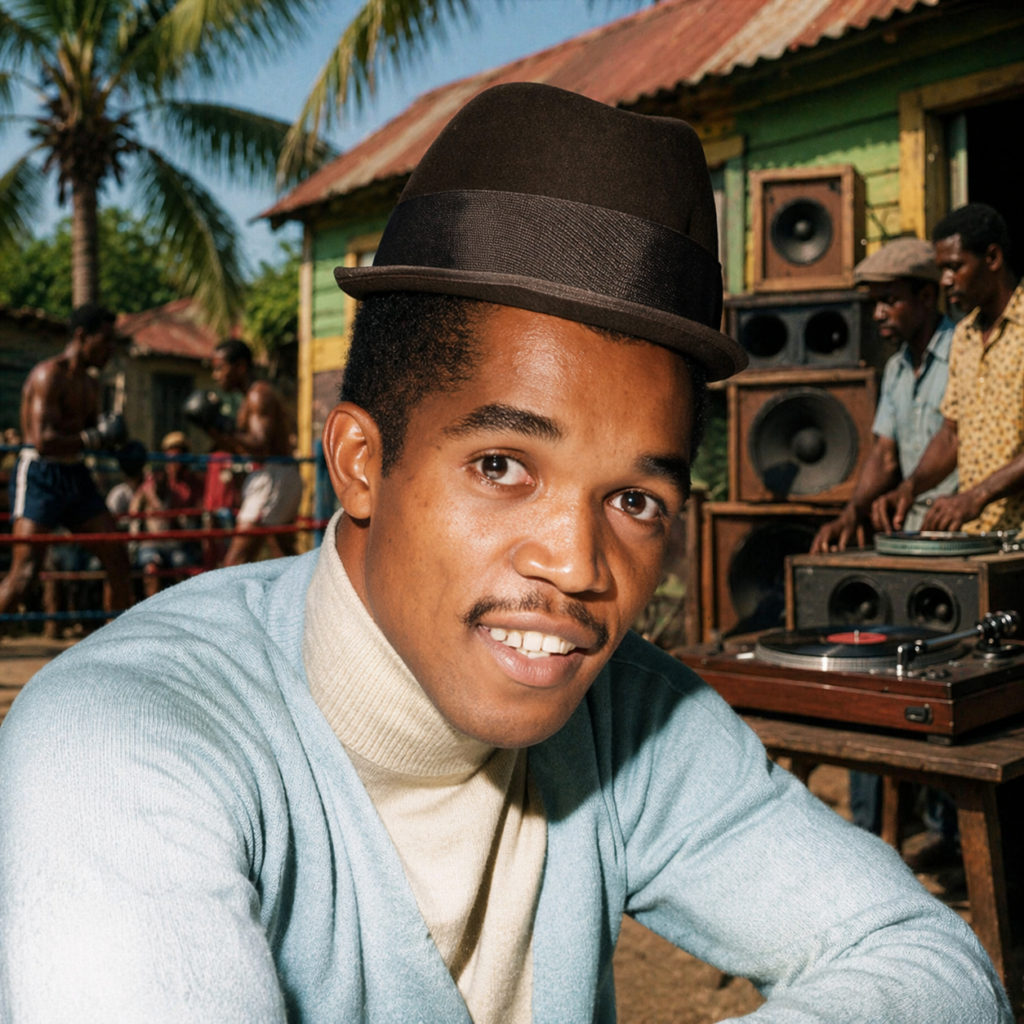
In Jamaica at that time, music wasn’t a leisure activity. It was a daily language, a way of communicating, and a declaration of who you were. Prince Buster grew up in an environment where artists were expected to mean something — where music was expected to mean something, where it could be argued over and held accountable.
Before he ever stepped into a studio, he fought in the ring as an amateur boxer. That discipline didn’t leave when the gloves came off. It followed him into the sound system scene that had taken over Kingston’s streets by the late 1950s. With radio still dominated by American imports, sound system operators held real cultural power — they were the ones deciding what the community got to hear.
Prince Buster cut his teeth in that world, then went ahead and built his own corner of it: Voice of the People. The name wasn’t accidental. A sound system wasn’t just a speaker rig — it was a platform for social exchange, a community conversation driven by music. That’s where his influence started taking root, not as a performer alone, but as a cultural architect.
The shift came when the pipeline of imported records started to dry up. Rather than wait for supply to return, local players started making their own. Historian David Katz has documented how this scarcity pushed sound system operators to become producers — and in doing so, seeded an entire local recording industry. Prince Buster was right at that crossroads.
Throughout his career, he returned again and again to the same conviction: Jamaican music had to come from Jamaican life. Leaning on imported records, in his view, meant surrendering ownership of your own sound. He wasn’t willing to do that.
From this period came recordings that helped define ska. “Oh Carolina” (1960) is among the most striking — pulling Nyahbinghi rhythms from Rastafarian tradition and fusing them with popular song structure to create something genuinely new. It signaled that Jamaica’s musical identity didn’t have to be borrowed from anywhere. It could be built from what was already there.
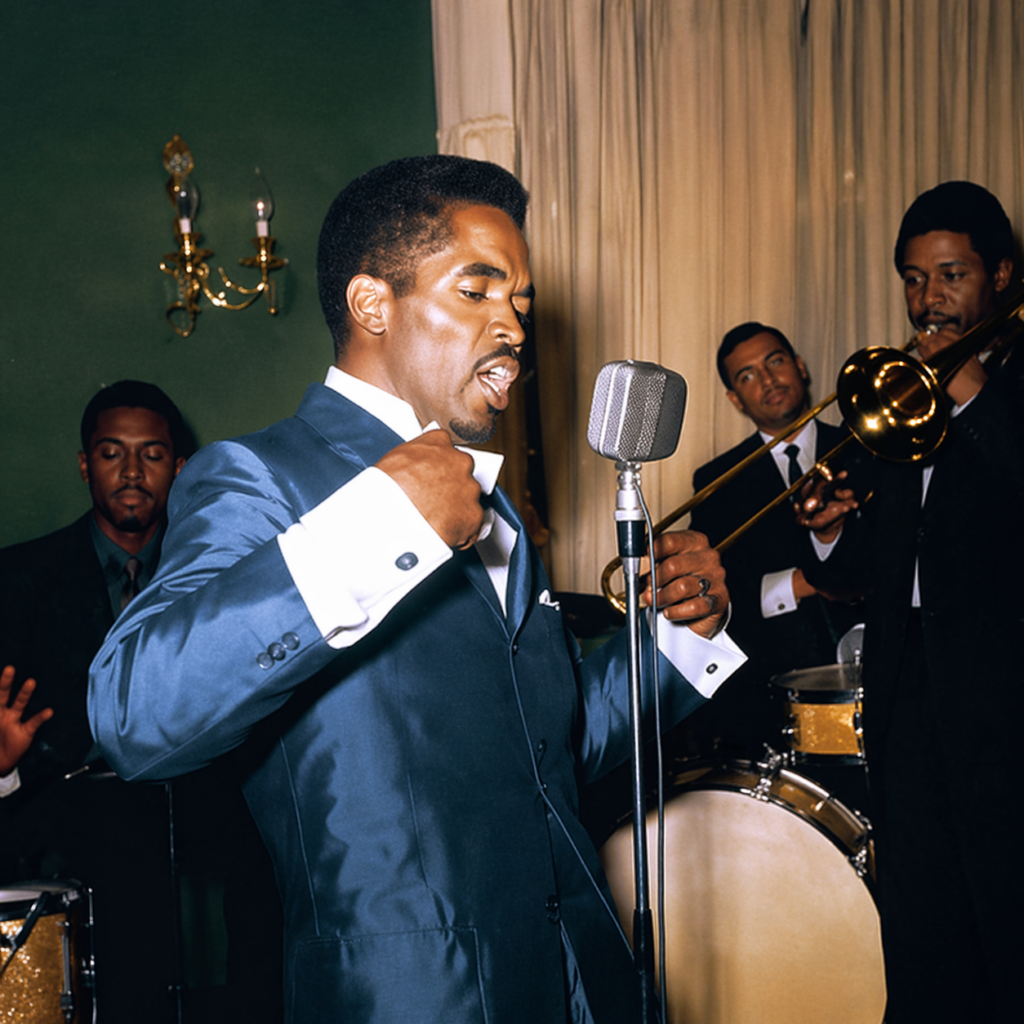
Prince Buster didn’t just make music — he controlled how it moved. As a producer who managed both recording and distribution, he held the entire chain in his hands. That level of self-sufficiency wasn’t just practical; it was a statement. It also made him one of the sharpest, most competitive operators in Kingston’s sound system world.
Competition, after all, was the heartbeat of that scene. His rivalry with Derrick Morgan became one of ska’s most electric stories — two artists trading blows through song, responding to each other record by record in what amounted to an early form of the musical clash. Music became the arena itself — where you didn’t throw punches, you dropped records. Reputation was made or buried through sound. Historian David Katz noted that these rivalries ran deeper than two artists trading shots; they were communities working out who they were, in public, through music (Katz, 2003). The stakes were never just personal.
Prince Buster’s reach eventually stretched well beyond Jamaica. By the late 1970s, he had become a foundational reference for Britain’s ska revival and the 2 Tone movement. Madness absorbed his energy and introduced it to an entirely new generation — their song “The Prince” was an open tribute to the man they credited with shaping their musical imagination.
Frontman Suggs (Graham McPherson) described the appeal directly:
“The fact that he came from the streets and had this incredible sense of humor and energy, that really appealed to us and had a massive impact on everything we did.”
(Suggs, BBC interview, quoted in The Guardian, 2016)
Jerry Dammers of The Specials — the other pillar of 2 Tone — went even further:
“From hip-hop to grime, dancehall, and reggae, very little has not been influenced, at least to some degree, by Prince Buster.”
(Jerry Dammers, quoted in The Guardian, 2016)
But that admiration wasn’t without complication. On a later record — released after Dammers had departed — The Specials took direct aim at the misogyny in some of Prince Buster’s lyrics. Working with activist Saffiyah Khan, they wrote:
“The commandments of I, Saffiyah Khan. Thou shall not listen to Prince Buster Or any other man offering kindly advice in matters of my own conduct. You may call me a feminazi or a femoid, and then see if I give a stinking shit.”
(The Specials - 10 Commandments (Encore, 2019)
The picture that emerges is complicated, and deliberately so. Prince Buster’s legacy wasn’t just about recordings — it was about the full force of his existence. He could be celebrated and challenged at the same time. Often by the same people.
His vocal approach added yet another layer. Across several recordings, Prince Buster used a half-sung, half-spoken delivery that would evolve into the toasting style central to sound system culture — and eventually, into forms of expression that echo across contemporary music. He wasn’t the only one shaping this; Count Machuki, widely recognized as the originator of the deejay style, belongs in that conversation too. But Prince Buster’s role in those formative years was real, particularly in pushing the door open for freer, more rhythm-driven vocal expression.
 By the end of the 1960s, reggae had arrived and the landscape was shifting. That’s how musical culture works — each era produces its own sounds and its own figures, and the previous generation finds itself repositioned. Prince Buster was no exception.
Bob Marley becoming the global face of reggae is simply history. But so is this: the rougher, earlier chapter — when Jamaica’s music industry was still being willed into existence by individuals working without a template — has Prince Buster written all over it.
That’s his legacy. He was part of the generation that figured out how Jamaican music could be made, distributed, and heard — and laid the groundwork that everyone who came after would, consciously or not, build on.
Prince Buster — the contradictory, foundational figure behind Jamaica’s transformation into a global musical force — died on September 8, 2016, at a hospital in Miami, Florida, from heart complications. The Prince left a visionary legacy: something that always moved with purpose, always aimed further ahead than the moment it was in. One Step Beyond!
(Text: Keyko, Editor & Translation: Sam)




Show Comments