


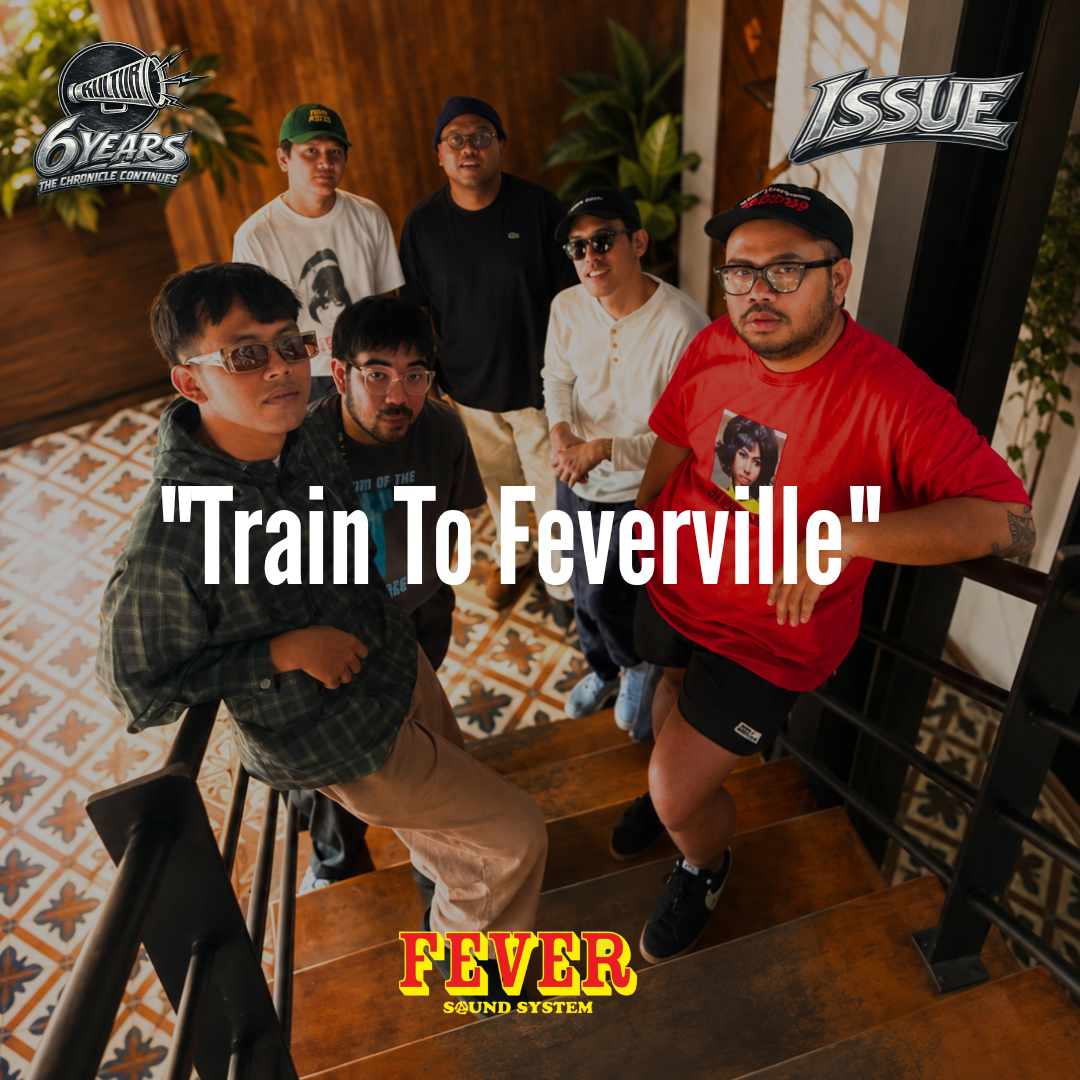
Engine ’45
It started in a South Jakarta bedroom — cigarette smoke, records everywhere, no plan. Nearly two decades later, the name still hits like a spell. From two young men who had the word crazy attached to their names more often than not, FEVER emerged. A collective no one realized was a dialectic until it already was one. Born from the exhaustion of watching a scene forget why it existed. It grew. Others came along. And they all carried the consequences of that madness together.
Yanu Irie, one of the figures in this stylish and powerful selectors collective, has a short answer for what pushed Fever into existence and made it a magnet on Jakarta’s dance floors — before it eventually took flight across continents.
“The 7-inch format.”
That’s how he explains it. Then adds: “Because we wanted to bring it back to the radio DJ era.”
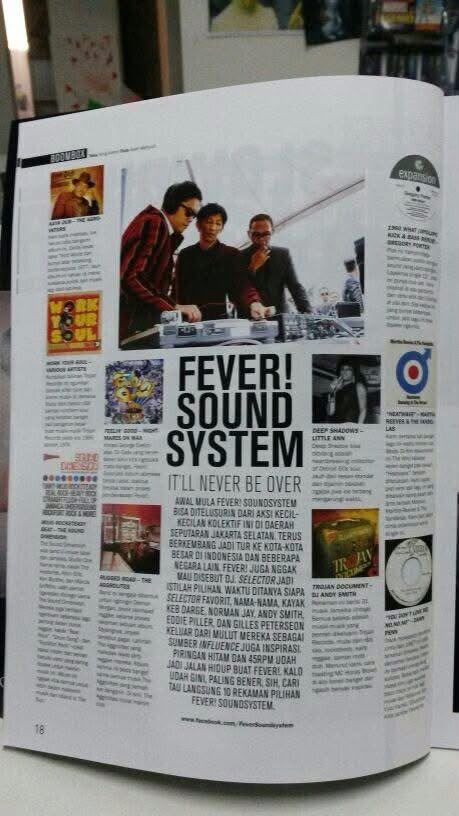
Though he walks it back a little. Iqbal Djoha and Iman a.k.a Dr.Yez — the two young men from that opening paragraph — carry more history than any single explanation covers. Ari watched both founders comb through Taman Puring and Jalan Surabaya, hunting records for ten thousand rupiah a piece while learning everything from scratch.
Dr.Yez confirms how thin the references were back then. The only method he found that worked:
“Learn, dig — gut feeling and a skull made of stone.”
For Fever, digging was never just about music. It was how they read the places they traveled to: the history, the culture, the colonial traces that always led them back to the music itself. In Singapore, for example, they’d first look into who colonized the place, what history needed to be understood, what remnants remained — and that thread always brought them back to the record. A way of reading culture before finding the music inside it.
Iqbal remembers the stretch from 2009 to 2011, when ska and reggae bands were being turned away from Jakarta venues one by one — “sales too low, too much trouble, they wreck the place.” The sidestream ska-reggae universe they’d stepped into felt like it was driving Route 66 straight toward a six-foot hole in the ground.
Then an answer appeared — a video of a selector named Jurassic Sound System, playing in the middle of a market with whatever speakers were available.
“This is what we need to make,” Iqbal told Dr.Yez at the time.
And Fever Sound System was officially born, with a logo designed by Nyonk (one of Jakarta’s fascinating Mod revivalist music outfit, Innocenti). Their first residency at Borneo Beerhouse in Jakarta. Since then, the train has kept moving without needing a map.
Nevermind The Bollocks, Here’s Fever Sound System!
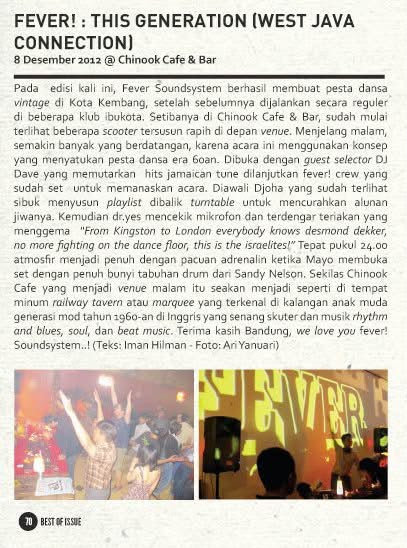
Musically, Fever is a train that deliberately chose the road less traveled. While other DJs in 2013 were chasing beat matching through drum hits, they were using chopping techniques — hunting for drum intros so transitions could flow smoothly stylish.
But finding your own lane doesn’t make the ride easier. The hardest challenge, says Iqbal, was never about DJ skill or musical taste. It was about venues that didn’t believe, equipment that wasn’t there, budgets that made no sense. “Sometimes the venue wasn’t sure about the budgeting either,” he recalls — thinking back to a time when the only sponsors came from events supported by local brands, while bars and restaurants answered first to cash flow and economic impact. The solution was one word, repeated throughout this entire conversation: gotong royong — collective effort.
Iqbal sums up their strategy at the time:
“We just go for it. The only thing that matters is getting our records to play and getting people to listen.”
Yanu Irie remembers the most physical version of that fight. Around fifteen people carried turntables from the first floor to the fifth. Not the crew, not a production team. In the vocabulary of politics: a fluid mass — a group with no formal structure, one voice, and a solid hunger. They wanted one thing: this Fever party had to happen.
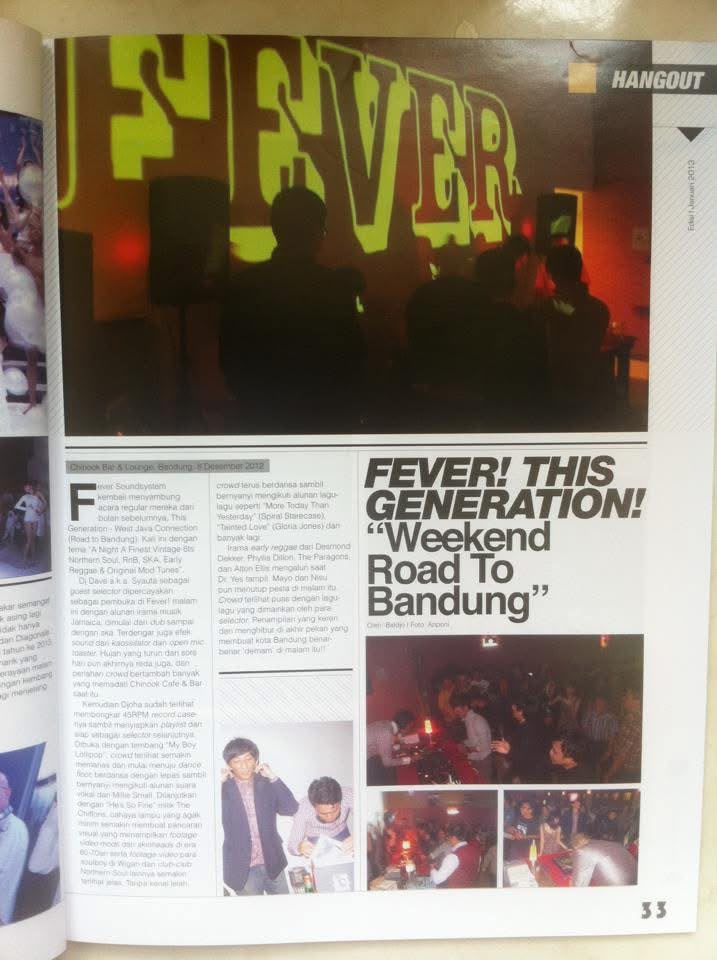
For Dr.Yez, this is the manifesto of “Party first!” — because in the Fever dictionary, digging and partying are an absolute pair, two things that can’t exist separately. He frames it as:
“Delivering curiosity and the drive to share knowledge in the same breath”
Fever Are One Family
Fever is a collective whose front door has never had a lock. Always open — including to new energy. Philipponk, one of the capital’s most prominent artists today, came through a different door: digital, not vinyl.
“The opposite of the others — they started with records then went digital. I went digital first.”
That’s how he describes his entry into the Fever train as a new energy, adding to the selector lineup. And the real reason he stayed wasn’t music — it was hanging out for no particular reason. “The reason is no reason,” he says, laughing. He also confirms that Fever Sound System is home — high enough for creativity to stretch, wide enough for brotherhood to spread.
As a music collective, Fever — like most collectives — has its own foundation. Dr.Yez, echoed by the others, underlines it: a sense of belonging that was deliberately planted from the beginning. “Good friends, good family.”
Gilang Fitzz, a veteran scenester from Jakarta, arrives with a different story. No stranger to this collective since the early days, his presence in the next chapter sits closer to crisis than celebration. During the pandemic, when Dr.Yez, he somehow decided to do “The Lost Boy” role in Bali and leaving Iqbal to hold things down alone, Gilang Fitzz stepped in to fill the gap. “Iqbal was kind of on his own, struggling alone,” he recalls — thinking back to when they started broadcasting again under the name “Fever Live Injection”, one of the collective’s brainchildren that won over some of the scene’s most respected figures. Eddie Piller from Acid Jazz Records transmitted it through “Totally Wired.” Back home, they earned the approval and a program from David Karto — one of Indonesia’s key music impresarios — through DeMajors. And eventually, “Fever Live Injection” became one of the signature magnets of the capital’s most stylish independent radio station: RRO (Radio Rumah Oma).
Gilang Fitzz has his own way of explaining why this collective runs stronger than solo work. “If it’s just me, people won’t know me for long,” he says.
“But together, we go further — the baton never hits the ground.”
For him, Fever provides a space for expression that can’t be found alone — a place where wild ideas about the future can be thrown out with no fear.
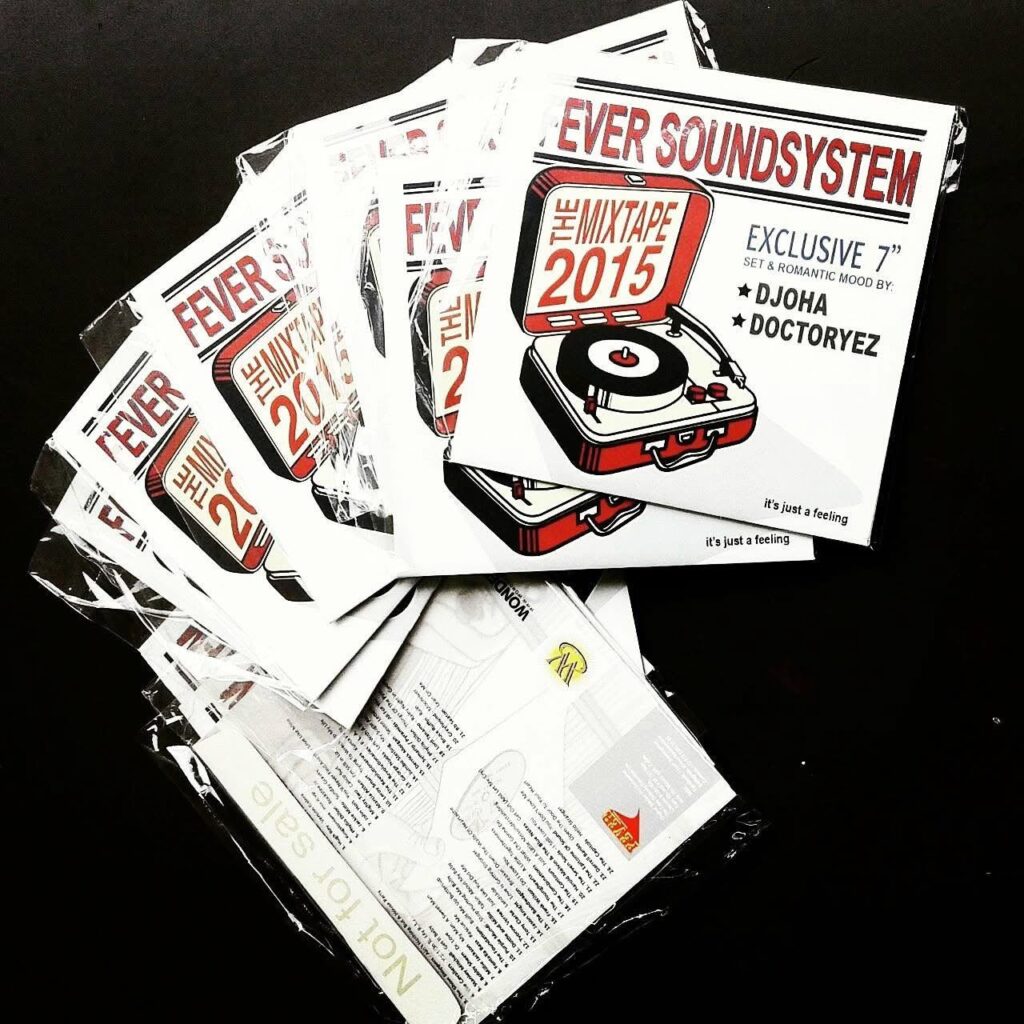
A Stylish Squad
On the question of responsibility to a new generation, the answer took on a life of its own: “bakti skena” — scene service. That regeneration is already moving through Yondi, an MC shaped indirectly by two mentors, Juik Cobra and Sir. Allen. An MC whose orbit sits well outside Fever’s usual radius, yet adds another spectrum to every party they throw. Yondi brings a compelling infusion through his interest in Deeder Zaman of Asian Dub Foundation.
Philipponk’s footsteps already sound deeply funky. Gilang Fitzz, who grew up alongside his own collection of oi!, punk, and hardcore — actually found skinhead culture inside this moving Fever train.
Fever, with a mild kind of awareness, has long woven audio and visual together into one identity. Iqbal remembers:
“We were spinning records from the late ’50s — bluesy, rockabilly. So the fashion and the look matched that, at the time.”
Yanu Irie, shares his philosophy with ease:
“It just happened naturally, because we genuinely love ‘Do Nothing’ by ‘The Specials.’ The lyrics that taught us”
But for us at kultur, it feels entirely accurate to call Fever the particle that forms the epicenter of a scene’s style — the adibusana (haute couture), the reference point that the Indonesian Jamaican Sound world keeps looking toward.
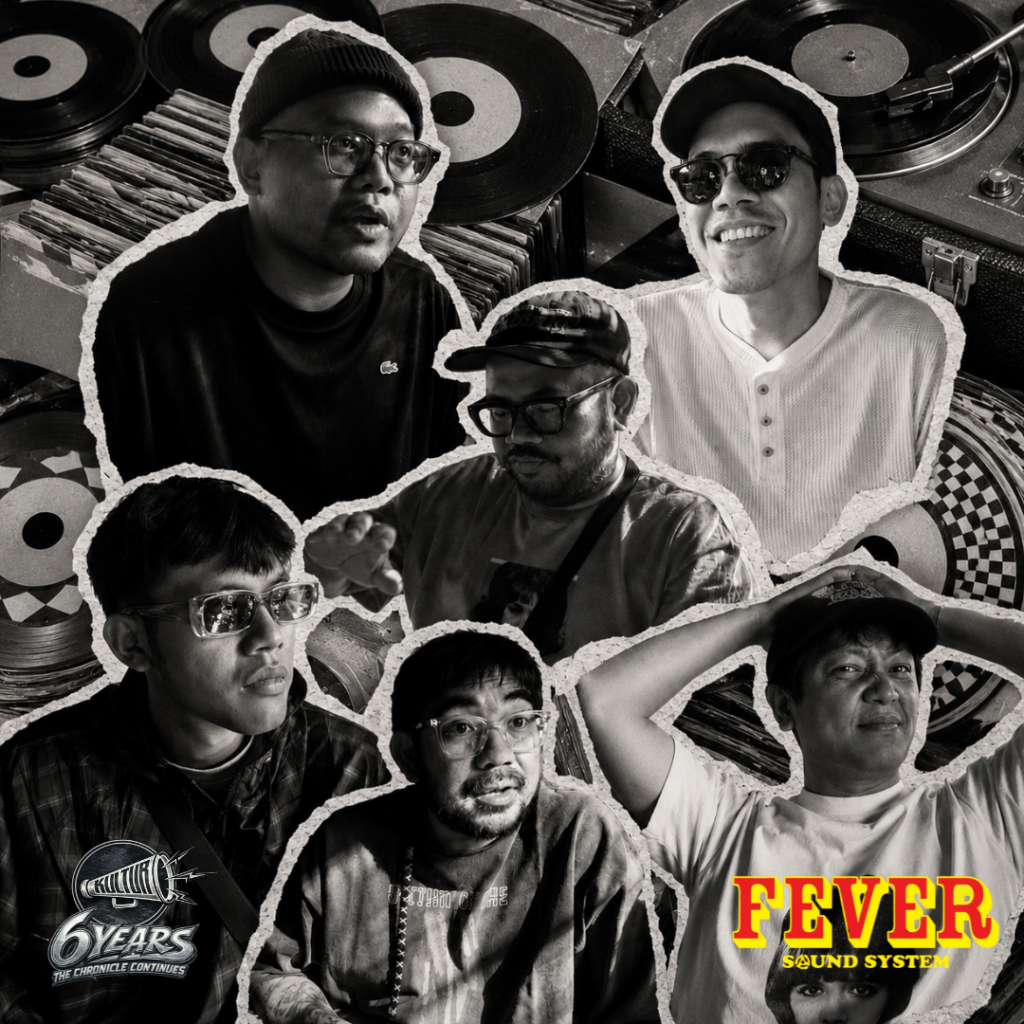 Fever Sound System — bedroom-born, brotherhood-built, record-fueled. A handful of people became a movement that stretched from Southeast Asia all the way into Europe. The train hasn’t stopped. Neither has the reason it left. Sister and brethren, this is a train to Feverville.
(Sam)


Show Comments